
Spring Car Racer
In my Introduction to Mechanical Engineering class we had a contest where we were meant to build a spring, capacitor, or gravity powered race car to make it through select obstacles. We were allowed to choose which combination of obstacles our car would run against and so we were able to specialize for a certain set of challenges.
Initial Design
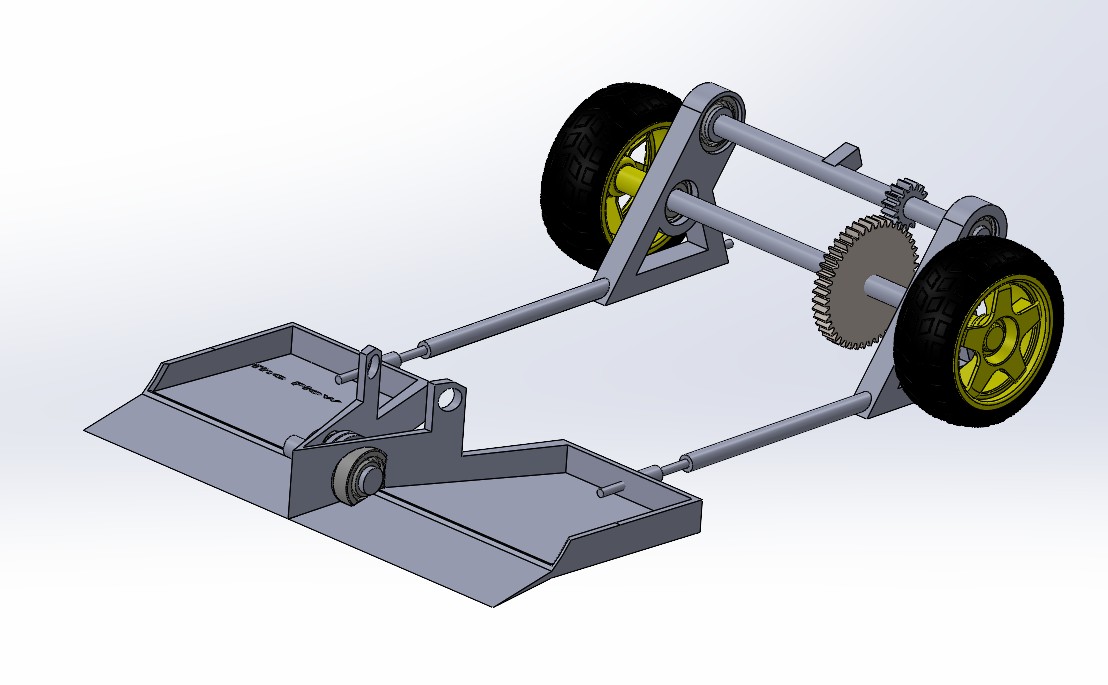
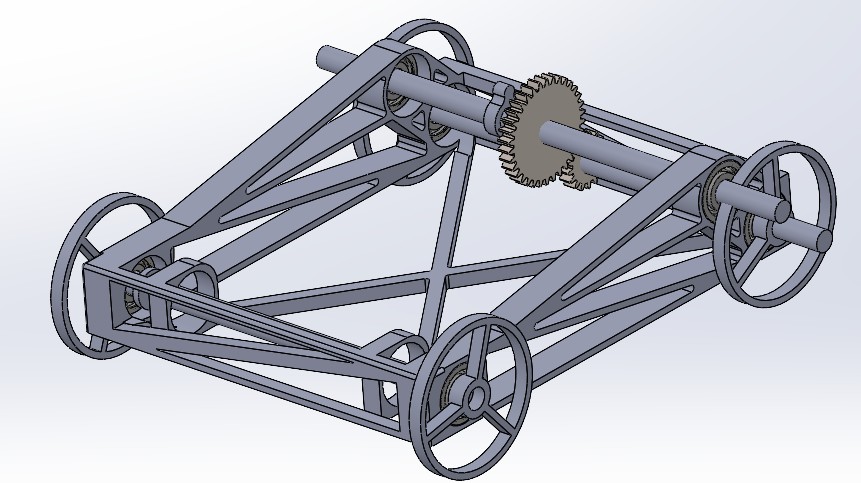
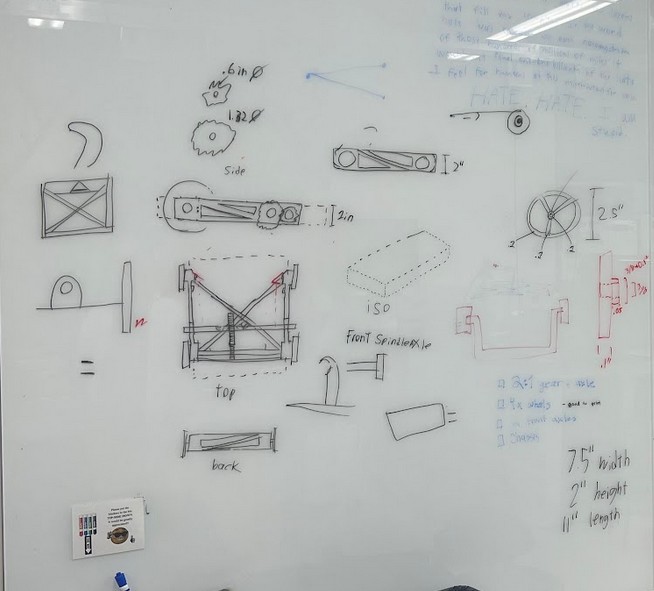
Our initial design was much more ambitious than our final one. We set out to achieve the most difficult challenge which was to pick up several metal "hitchhikers" with a large scoop in the front. This design ran into issues with the springs powering the rear wheels. There was too much energy being released at once making it impossible for the wheels to grip the ground. After multiple failed tests and modifications we began to work on another design.
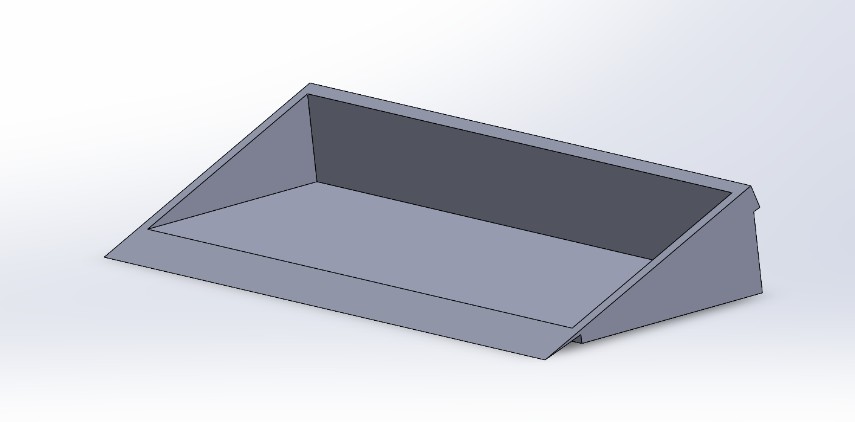
The large scoop is the most prominent feature of this design and is what most of the design was built off of. It featured a a plow like wall in the middle to protect the front wheel and ensure nothing got caught on it. The rear was designed to be
Second Design
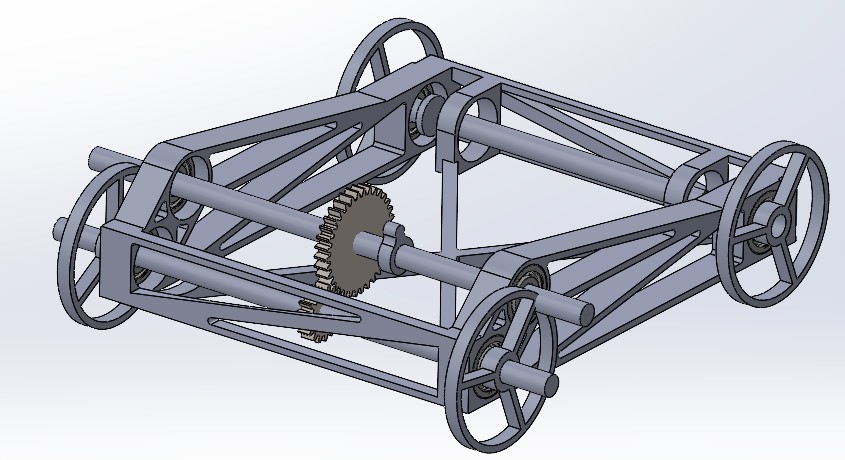
The second design was simply meant to go as far as possible across relatively easy obstacles. It was at this point that our team began to pay attention to design issues that the other teams were running into. We felt confident we could still rank fairly high overall with this design if we were able to make it work. However, this design ran into issues with the final assembly's parts not fitting together with their tolerances and we had been developing the design we chose to submit at the same time and felt more confident in that one. So despite the time we spent developing the second design we avoided falling into a sunk cost fallacy and went with the third and final design.
Third and Final Design
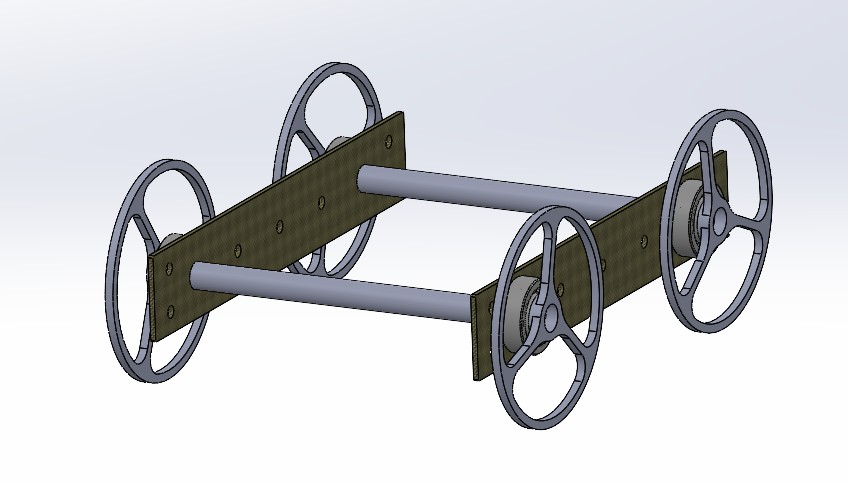
All our other designs and the designs of the other teams focused on utilizing the provided springs and capacitors to propel the cars forward while using the ramp as a supplement. The third design was meant to use only potential energy from the ramp. It was also made as light as possible since a bonus category was to have the "lightest racer." This bonus category offered a relatively huge amount of points and we calculated that if we were able to make a single jump and win this bonus category we would be virtually guaranteed to make the top three. This racer was successfully assembled and tested. In tests it was able to complete the jump we needed it to and our team was very confident that it could make the jump in the official competition.
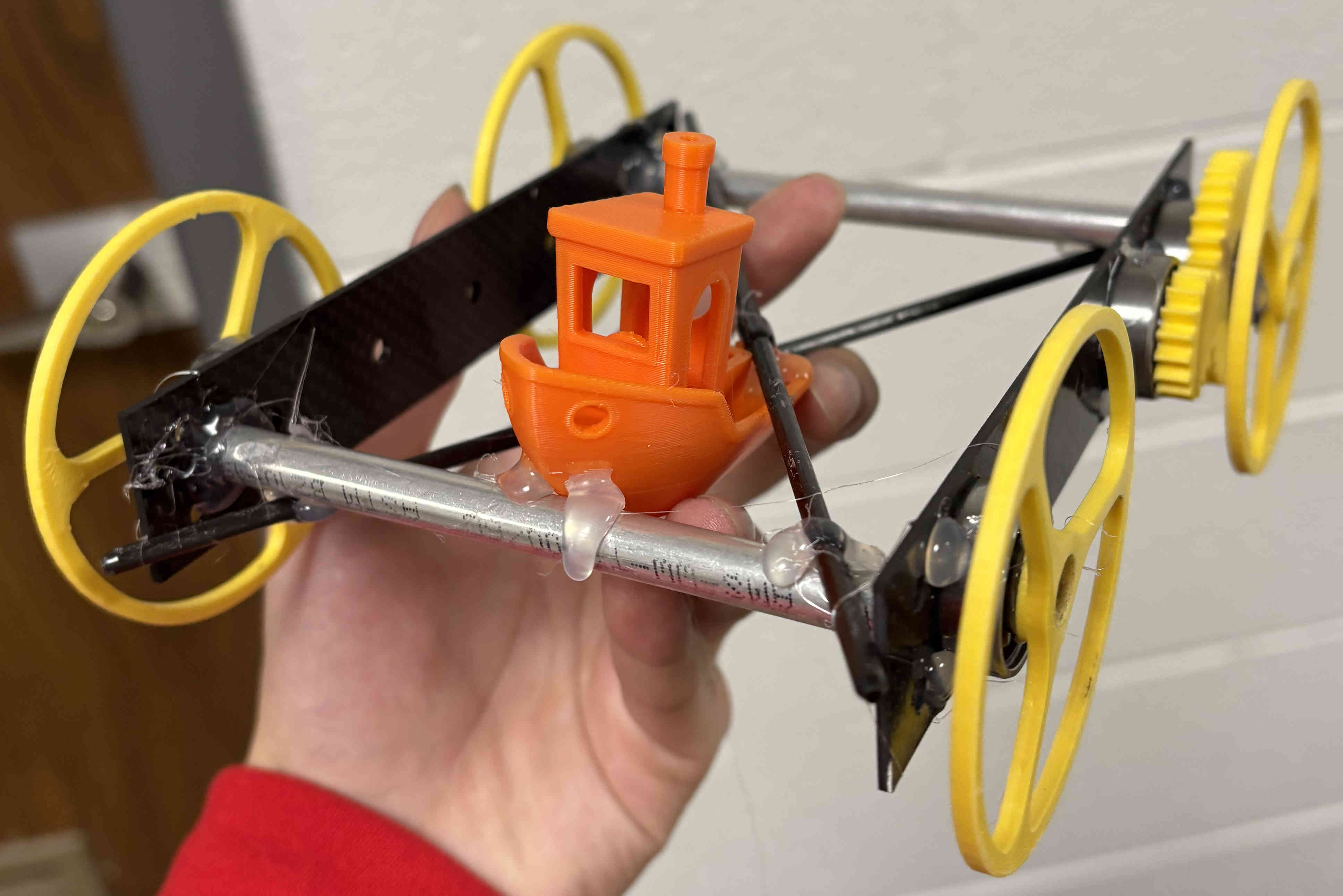
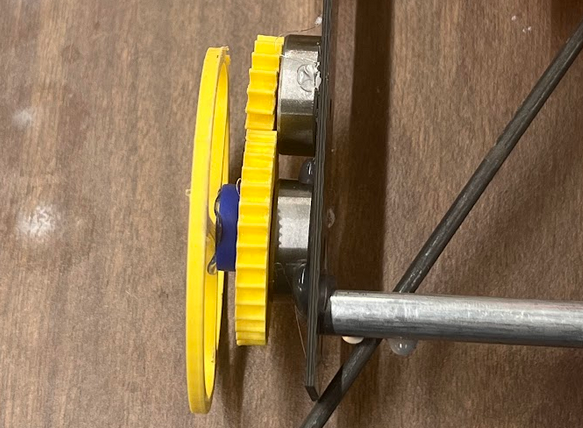
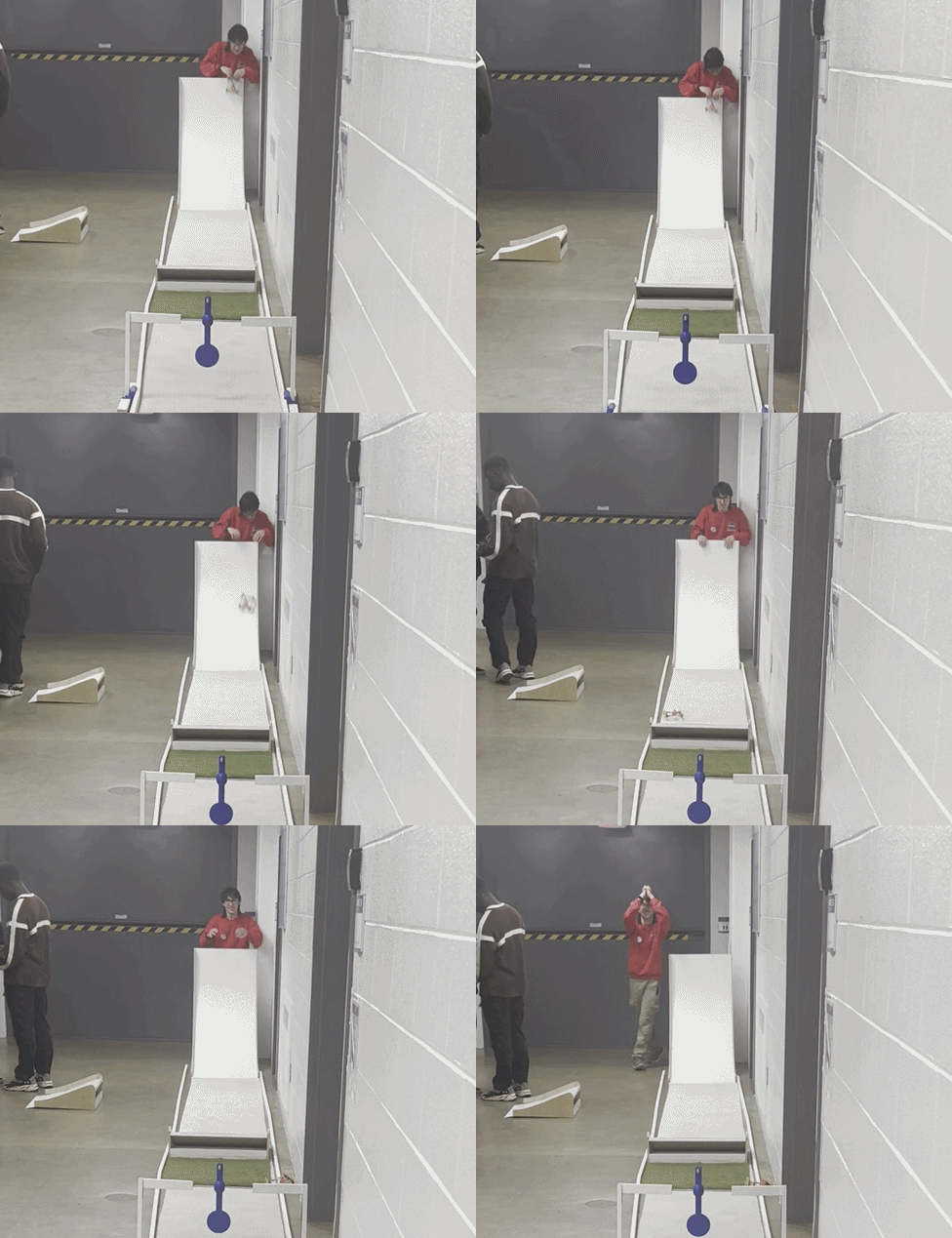
Our first successful test run
Results and Reflection
Despite performing very well in test runs our potential energy powered racer was not able to complete the jump in competition. This was caused by the fact that during the very first official run the racer veered into one of the track's walls and broke off a wheel. We were unable to repair the wheel mid-competition and had to run the remaining tests with a very loosely, superficially attached wheel instead.
The project itself was a lot of fun and gave us a lot of freedom to work through the design process ourselves.